
Chinese Herbs and IBS: What Does Scientific Research Say?
Irritable bowel syndrome, commonly known as IBS, is a chronic disorder of gut–brain interaction. It can cause recurring abdominal pain, bloating, cramping, diarrhea, constipation or alternating bowel habits. IBS is commonly classified as diarrhea-predominant IBS (IBS-D), constipation-predominant IBS (IBS-C), mixed IBS (IBS-M) or unclassified IBS.
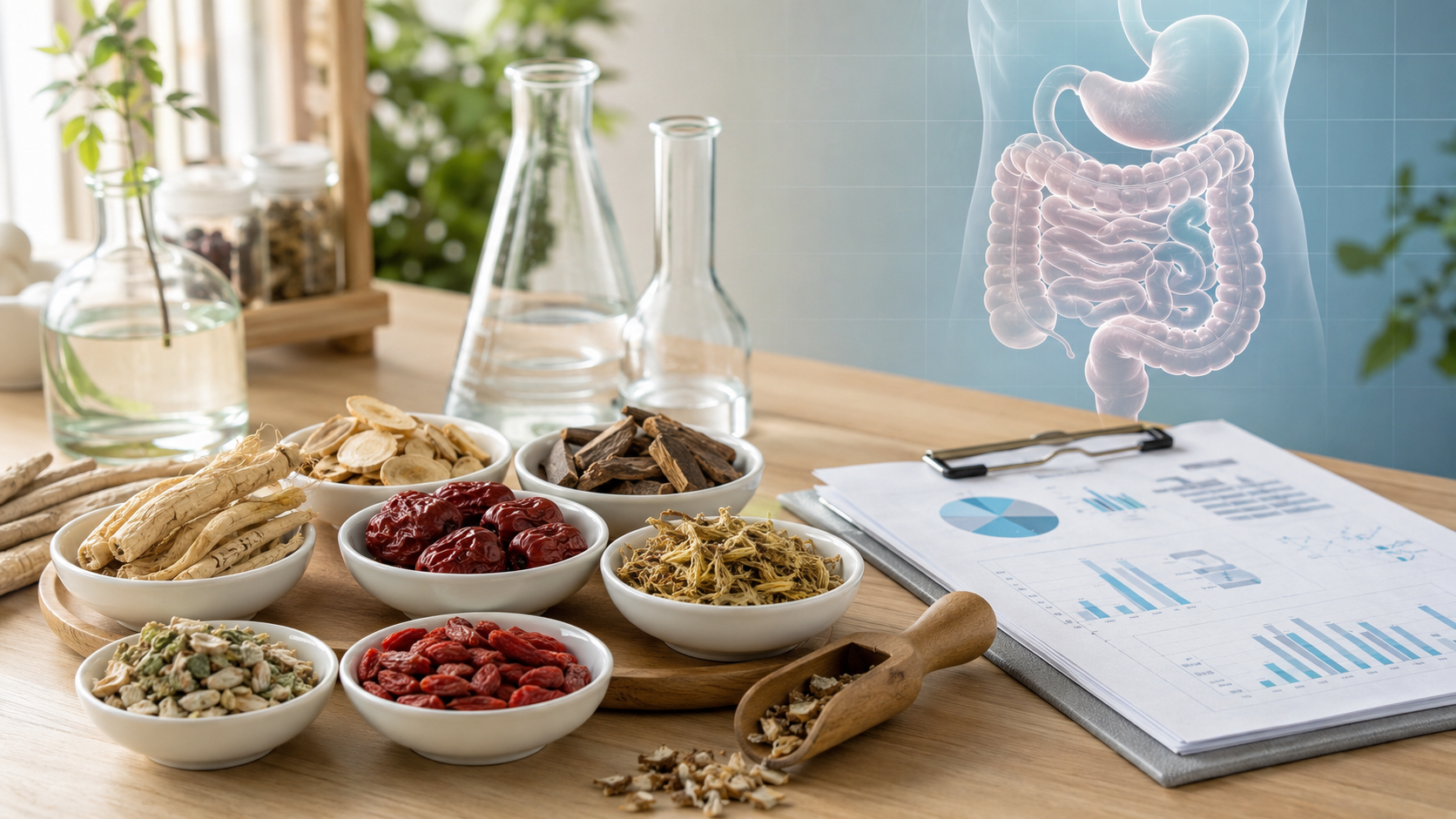
Although IBS does not usually cause visible damage to the intestines, its symptoms can significantly affect eating habits, sleep, work, travel and emotional well-being. Its development may involve altered intestinal movement, visceral hypersensitivity, changes in the gut microbiome, immune activation, food sensitivities and communication between the digestive system and the brain.
Chinese herbal medicine is increasingly being studied as a complementary approach for managing IBS. Some clinical trials have reported improvements in abdominal pain, stool consistency and overall IBS symptoms. However, findings remain inconsistent, and the overall quality of evidence is limited. Larger, rigorously designed clinical trials are needed before Chinese herbal medicine can be considered a proven treatment for IBS.
How Chinese Medicine Views IBS
Traditional Chinese medicine does not classify every person with IBS under one diagnosis. Instead, treatment is traditionally based on the individual’s combination of digestive symptoms, appetite, energy, sleep, emotional stress, and tongue and pulse reading.
Common traditional patterns associated with IBS-like symptoms include:
- Liver and spleen disharmony
- Spleen qi deficiency
- Accumulation of dampness
- Spleen and kidney yang deficiency
- Heat or stagnation affecting digestion
These are traditional diagnostic frameworks and should not be considered direct equivalents of modern biomedical diagnoses.
One important feature of Chinese herbal medicine is the use of formulas containing several herbs rather than relying on a single ingredient. A practitioner may also adjust the formula according to whether diarrhea, constipation, bloating, pain or stress-related urgency is the dominant problem.
Tong Xie Yao Fang for Diarrhea-Predominant IBS
One of the most extensively studied traditional formulas for IBS-D is Tong Xie Yao Fang, also written as Tong-Xie-Yao-Fang or TXYF.
The traditional formula usually contains four principal herbs:
- Bai Zhu, or Atractylodes macrocephala
- Bai Shao, or Paeonia lactiflora
- Chen Pi, or citrus peel
- Fang Feng, or Saposhnikovia divaricata
In traditional practice, this combination is frequently considered when diarrhea, abdominal discomfort and urgent bowel movements become worse during periods of emotional stress.
A 2018 randomized, placebo-controlled trial included 160 patients with IBS-D. During the four-week treatment period, 57.5% of patients receiving Tong Xie Yao Fang reported adequate relief of global symptoms, compared with 37.5% receiving placebo. The rate of adverse events was low and similar in both groups.
However, a more recent phase II trial published in 2025 produced less encouraging results. Ninety-six adults with IBS-D received either Tong Xie Yao Fang granules or placebo for eight weeks. The response rate was 79.2% in the herbal group and 70.8% in the placebo group, but the difference was not statistically significant. 2025 BMJ Open trial. There were also no significant differences in stool frequency, stool consistency, quality of life, anxiety or depression. The trial did not determine why both groups experienced substantial improvement. The high response in the placebo group illustrates the difficulty of studying IBS and highlights the need for larger trials with longer follow-up periods.
The contrasting results demonstrate why one successful study is not enough to establish that a treatment works. IBS trials can have particularly high placebo-response rates, and differences in formulas, dosage, diagnostic criteria and patient characteristics may influence the outcome.
Chinese Herbal Medicine for Constipation-Predominant IBS
Chinese herbal formulas have also been investigated for IBS-C.
A 2015 double-blind trial studied 125 patients with constipation-predominant IBS. Participants received either a standardized seven-herb preparation or placebo for eight weeks. The herbal preparation contained ingredients including white peony root, immature bitter orange, magnolia bark, citrus peel, liquorice, rhubarb and atractylodes.
Compared with placebo, the herbal treatment improved adequate relief, overall IBS symptom scores, stool consistency, straining and the frequency of hard or lumpy stools. However, there was no statistically significant improvement in abdominal pain at the end of the treatment period.
This is an important distinction. One formula may improve constipation and bowel satisfaction without necessarily relieving every symptom associated with IBS. The customized formula needs to be prescribe to each individual.
What Have Other Clinical Trials Found?
A frequently cited 1998 randomized, double-blind trial involved 116 people with IBS. Participants received a standard Chinese herbal formula, an individualized formula or placebo for 16 weeks. Both herbal groups showed greater improvement in bowel symptom scores and global IBS symptoms than the placebo group. The participants also reported less interference with daily life.
Not every study has reproduced those findings. In a 2006 placebo-controlled trial involving 119 patients with IBS-D, researchers found no significant difference between Chinese herbal medicine and placebo in global symptom improvement at either eight or 16 weeks.
Together, these trials suggest that certain formulas may help some patients, but responses are inconsistent and cannot be generalized. Each patient needs his/her formula to achieve the best result.
What Do Systematic Reviews Show?
Systematic reviews combine the results of several clinical trials and can provide a broader picture of the evidence for Herbal formula for IBS.
A 2021 meta-analysis examined 10 randomized trials involving 2,501 participants. Compared with placebo, Chinese herbal medicine was associated with greater relief of overall IBS symptoms and abdominal pain. The relative risk for adequate global symptom relief was 1.76, while the relative risk for abdominal pain relief was 1.85.
However, adverse events were also more common in participants taking Chinese herbal medicine than in those receiving placebo. There was considerable variation among the study results, particularly for global symptom relief. The variation may reflect differences in herbal formulations, IBS subtypes, study populations, treatment duration, outcome measurements and research quality. These differences make it difficult to determine which formulas, if any, are most effective for particular patients.
Another 2021 network meta-analysis included 28 trials and 3,323 patients. It reported potential benefits for different categories of Chinese herbal therapy, including improvements in abdominal pain, abdominal distension, stool consistency and overall symptom severity. Nevertheless, the researchers graded the overall quality of evidence as low because of limitations such as small samples, insufficient blinding, inconsistent formulations and risk of bias.
The most accurate interpretation is therefore that Chinese herbal medicine is promising but not conclusively proven for IBS. Each IBS patient needs his or her individualized formula instead of one formula, that is one of the reason that the results showed big difference among different trials.
How Might Chinese Herbs Affect IBS?
Researchers have proposed several possible mechanisms through which Chinese herbal formulas might influence IBS symptoms. These include:
- Regulating intestinal movement
- Reducing intestinal spasms
- Modifying visceral pain sensitivity
- Supporting the intestinal barrier
- Affecting immune and inflammatory signalling
- Influencing serotonin activity
- Changing the composition or activity of the gut microbiome
- Modulating communication along the gut–brain axis
For example, an experimental study of Tong Xie Yao Fang found changes in gut bacteria and colonic serotonin levels in an animal model of IBS-D. Serotonin is involved in intestinal sensation, secretion and movement.
These findings may help researchers understand how specific formulas could work, but animal and laboratory studies do not prove that the same mechanisms or benefits occur in humans. More human clinical research is required.
Are Chinese Herbs Safe for IBS?
“Natural” does not automatically mean risk-free. Chinese herbal products contain biologically active substances and can cause side effects or interact with prescription and over-the-counter medicines.
Adverse effects reported in IBS studies have included:
- Nausea
- Vomiting
- Constipation
- Abdominal discomfort
- Flatulence
The safety of a formula also depends on the correct identification of herbs, appropriate dosage, manufacturing quality and the patient’s existing medical conditions.
For safer use:
- Consult a properly trained and licensed Chinese herbal medicine practitioner.
- Tell your gastroenterologist and primary-care doctor about every herb or supplement you take.
- Choose products manufactured according to recognized quality-control standards.
- Avoid purchasing unlabeled mixtures or formulas without a complete ingredient list.
- Do not assume that a formula used for IBS-D is appropriate for IBS-C.
- Seek professional advice before taking herbs during pregnancy or breastfeeding, before surgery, or when using anticoagulants, diabetes medicines, immune-suppressing drugs or medicines with a narrow therapeutic range.
- Stop taking the product and obtain medical advice if you develop jaundice, dark urine, severe fatigue, persistent nausea, an allergic reaction or worsening abdominal symptoms.
Chinese Herbs Should Not Replace Proper Diagnosis
Symptoms that resemble IBS can sometimes be caused by coeliac disease, inflammatory bowel disease, thyroid disorders, infection, medication reactions, bile acid diarrhea or, less commonly, colorectal cancer.
Medical evaluation is particularly important when symptoms are accompanied by:
- Rectal bleeding
- Unintentional weight loss
- Anaemia
- Fever
- Persistent vomiting
- Symptoms that regularly wake you from sleep
- A recent or major change in bowel habits
- A family history of colorectal cancer, coeliac disease or inflammatory bowel disease
Chinese herbs should not be used to delay appropriate testing when alarm symptoms are present.
An Integrative Approach to IBS
IBS usually responds best to a personalized treatment plan rather than one isolated remedy. Depending on the IBS subtype and the patient’s medical history, an integrative plan may include:
- Dietary assessment
- Appropriate soluble fibre
- A professionally supervised low-FODMAP trial
- Regular physical activity
- Adequate sleep
- Stress-management techniques
- Gut-directed psychological therapy
- Prescription or over-the-counter medication
- Carefully selected Chinese herbal medicine
Because IBS involves communication between the digestive system, nervous system and emotional centres of the brain, addressing stress and sleep may be just as important as changing food or using medication.
Conclusion
Scientific research suggests that certain Chinese herbal formulas may help reduce IBS symptoms, particularly diarrhea, constipation, abdominal discomfort and dissatisfaction with bowel movements. Positive results have been reported for Tong Xie Yao Fang and standardized multi-herb preparations.
Chinese herbal medicine may therefore be considered as a complementary option for selected patients, provided that the formula is prescribed individually, obtained from a reliable source and used under qualified professional and medical supervision.
Chinese herbal medicine may be considered alongside dietary, medical and stress-management strategies. Patients may also learn about acupuncture for IBS as another complementary approach.
References
- Bensoussan A, Talley NJ, Hing M, et al. Treatment of Irritable Bowel Syndrome With Chinese Herbal Medicine: A Randomized Controlled Trial. JAMA. 1998;280(18):1585–1589. PMID: 9820260.
- Leung WK, Wu JC, Liang SM, et al. Treatment of Diarrhea-Predominant Irritable Bowel Syndrome With Traditional Chinese Herbal Medicine: A Randomized Placebo-Controlled Trial. American Journal of Gastroenterology. 2006;101(7):1574–1580. PMID: 16863563.
- Bensoussan A, Kellow JE, Bourchier SJ, et al. Efficacy of a Chinese Herbal Medicine in Providing Adequate Relief of Constipation-Predominant Irritable Bowel Syndrome: A Randomized Controlled Trial. Clinical Gastroenterology and Hepatology. 2015;13(11):1946–1954.e1. PMID: 26133902.
- Chen M, Tang TC, Wang Y, et al. Randomised Clinical Trial: Tong-Xie-Yao-Fang Granules Versus Placebo for Patients With diarrhea-Predominant Irritable Bowel Syndrome. Alimentary Pharmacology & Therapeutics. 2018;48(2):160–168. PMID: 29856472.
- Li J, Cui H, Cai Y, et al. Tong-Xie-Yao-Fang Regulates 5-HT Level in Diarrhea-Predominant Irritable Bowel Syndrome Through Gut Microbiota Modulation. Frontiers in Pharmacology. 2018;9:1110. PMID: 30323765.
- Zheng H, Jin S, Shen YL, et al. Chinese Herbal Medicine for Irritable Bowel Syndrome: A Meta-Analysis and Trial Sequential Analysis of Randomized Controlled Trials. Frontiers in Pharmacology. 2021;12:694741. PMID: 34385918.
- Wu YB, Dai YK, Zhang L, et al. Pharmacological Treatments of Chinese Herbal Medicine for Irritable Bowel Syndrome in Adults: A Network Meta-Analysis of Randomized Controlled Trials. PLOS ONE. 2021;16(8):e0255665. PMID: 34358263.
- Luo M, et al. How Fragile Are the Positive Results of Chinese Herbal Medicine Randomized Controlled Trials for Irritable Bowel Syndrome? 2024. PMID: 39143474.
- Liang SB, Cheng HJ, Zhang QY, et al. Chinese Herbal Formula Tongxie Yaofang Granules for diarrhea-Predominant Irritable Bowel Syndrome: A Randomised, Double-Blind, Placebo-Controlled, Phase II Trial. BMJ Open. 2025;15(1):e088410. PMID: 39870499.