
Acupuncture for Psoriasis – A Therapy Beyond Symptomatic Relief
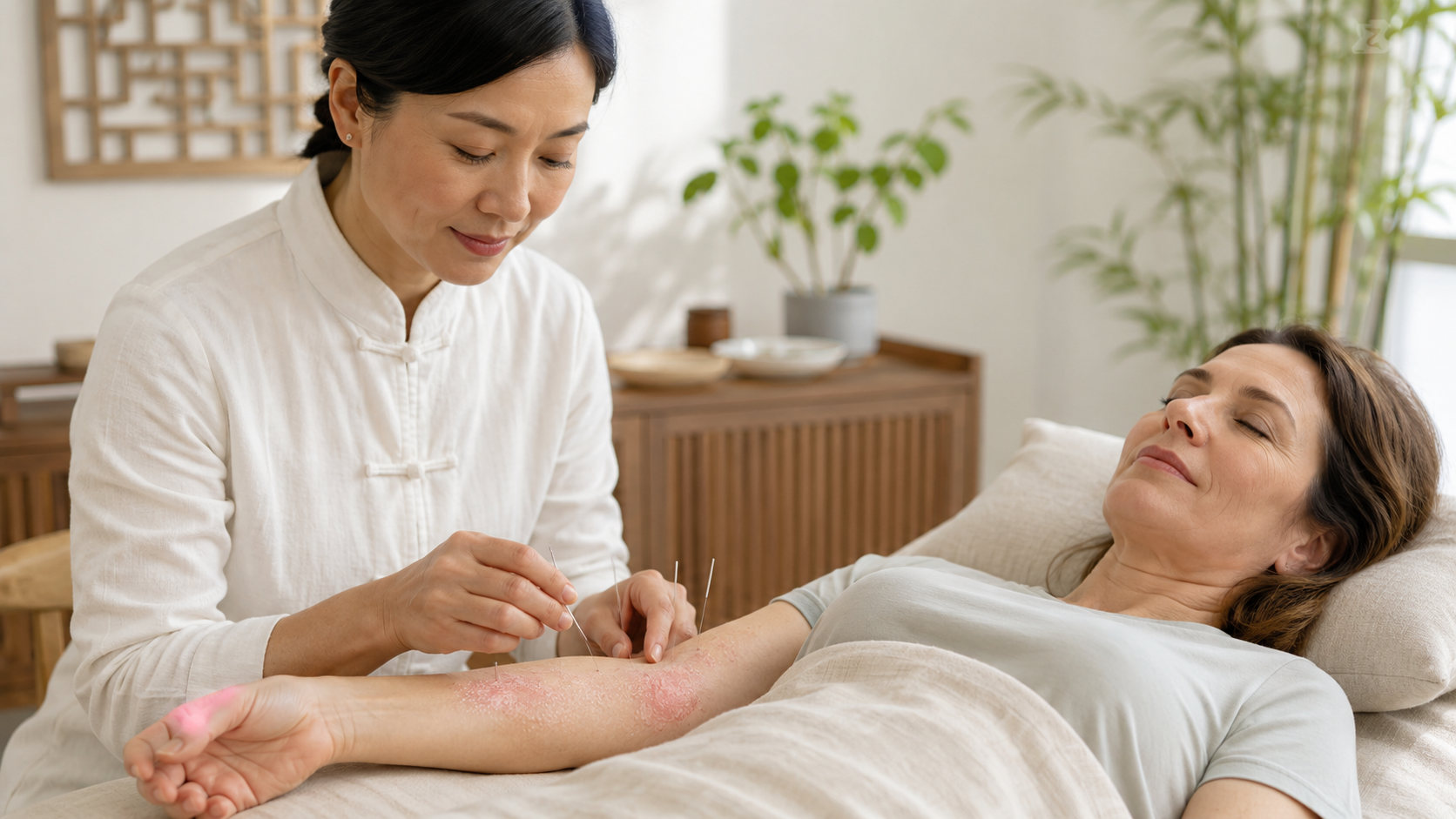
Acupuncture may support psoriasis management by helping reduce inflammation, stress, itching, redness, and recurring flare-ups. Treatment may include body acupuncture, ear acupuncture, cupping, and Chinese herbal medicine as part of a personalized Traditional Chinese Medicine plan.
Acupuncture should be used as a complementary therapy and not as a replacement for medical treatment prescribed by a dermatologist.
Why Patients Avoid Allopathic Treatment for Psoriasis
Psoriasis is an autoimmune disease, and treating it with conventional medicine often requires the long-term use of prescription medications. This can be prohibitively expensive and may also expose patients to significant adverse side effects.
Alternative Options for Treating Psoriasis
Given these concerns and their adverse impact on both health and overall quality of life, many patients seek a more holistic treatment approach—one that not only addresses the severity and recurring flare-ups of psoriasis but also helps alleviate the stress, anxiety, and other psychosomatic challenges that often accompany chronic skin conditions.
This is where non-pharmacological treatment approaches such as acupuncture have proven beneficial for psoriasis patients. Boston and Boca acupuncture clinics offer these therapies as a holistic alternative.
Acupuncture Therapy
Traditional Chinese Medicine (TCM) acupuncture is among the most popular and widely accepted complementary therapies in the Western world and beyond. It offers a drug-free treatment option that not only helps alleviate the debilitating symptoms of psoriasis but also promotes overall health and well-being.
Moreover, it is a cost-effective approach to managing chronic autoimmune diseases such as psoriasis. As a result, these holistic therapies provide an affordable path to healing and wellness.
How Does Acupuncture Work for Psoriasis?
Acupuncture strengthens the vagus nerves, resulting in the release of the body’s natural relaxing chemicals, such as endorphins, serotonin and GABA—a process that can balance our immune system so we do not produce antibody to attack our own tissues. Psoriasis is defined as an autoimmune disease.
Broadly speaking, Acupuncture and Chinese Herbs treat psoriasis by addressing the underlying internal imbalances rather than merely suppressing its symptoms. This holistic approach aims to cool “Blood Heat,” harmonize the immune system, improve microcirculation, reduce the inflammation and reduce stress levels—one of the major triggers of psoriasis flare-ups.
TCM uses three primary acupuncture methods, along with complementary therapies, to help manage psoriasis.
1. Targeted Acupuncture on Specific Meridians
A) Standard Body Acupuncture:
Fine needles are inserted into specific acupuncture points on meridians associated with the lungs, spleen, and liver. This is believed to regulate the flow of blood and Qi (vital energy). When your lung, spleen and liver function better, you have healthier gut lining, more balanced nervous system and you can cope with the stress much better than before. Your inflammation level will be optimized. The redness, itchy sensation and peeling of psoriasis will be reduced.
B) Cupping Therapy:
A specialized TCM technique that uses cupping to clear the heat and remove blood stasis, particularly for plaque psoriasis and for people who are nervous about needles.
C) Auriculotherapy (Ear Acupuncture):
Specific points on the ear are stimulated with needles to help reduce stress and anxiety.
2. Complementary TCM Therapies<
Herbal Medicine:
Customized oral herbal formulations and topical herbal preparations may be prescribed alongside acupuncture treatments, which can speed up the treatment process for psoriasis.
Clinical Studies Suggest That:
- Acupuncture may modulate the immune system by influencing T-cell responses and reducing inflammatory cytokine activity.
- Acupuncture may reduce inflammation and skin flaking by regulating neuropeptides.
- Acupuncture may reduce local vascular permeability, thereby limiting the leakage of fluid and protein-rich exudate into affected tissues.
- Acupuncture has been shown to optimize cortsol levels, which may help reduce stress-induced psoriasis flare-ups.
TCM clinics, such as Boston and Boca Acupuncture Clinics, led by experienced Traditional Chinese Medicine practitioners, offer customized acupuncture therapy along with a range of holistic treatments designed to reduce pain and inflammation, relieve stress and anxiety, and promote overall wellness.
However, it is essential for patients to ensure that their acupuncturist is appropriately qualified in Traditional Chinese Medicine and experienced in treating dermatological conditions such as psoriasis, eczema and hives.
Frequently Asked Questions
Does acupuncture cure psoriasis?
There is currently no guaranteed cure for psoriasis. Acupuncture is generally used as a complementary therapy to help manage symptoms, reduce the frequency or severity of flare-ups, and improve overall well-being.
How does acupuncture work for psoriasis?
Acupuncture involves stimulating specific points on the body to support the nervous system, circulation, and natural pain-relieving and relaxing responses. From a Traditional Chinese Medicine perspective, treatment aims to clear excess “Blood Heat,” improve the movement of Qi and blood, and address internal imbalances associated with inflammation and skin symptoms.
What psoriasis symptoms may acupuncture help manage?
Acupuncture may help reduce symptoms such as itching, redness, skin irritation, inflammation, scaling, discomfort, stress, and anxiety. Individual responses can vary, and improvement may occur gradually.
What acupuncture techniques are used for psoriasis?
Treatment may include standard body acupuncture, ear acupuncture, cupping therapy, and other complementary Traditional Chinese Medicine techniques. The chosen approach depends on the patient’s symptoms, comfort level, health history, and treatment goals.
Can cupping therapy be used for psoriasis?
Cupping may be included as part of a Traditional Chinese Medicine treatment plan, particularly when the practitioner identifies heat, stagnation, or poor circulation. It may also be considered for patients who feel uncomfortable with acupuncture needles. Cupping should not be performed directly over irritated, infected, bleeding, or severely damaged skin.
Can Chinese herbal medicine be combined with acupuncture?
A qualified Traditional Chinese Medicine practitioner may recommend customized oral or topical herbal preparations alongside acupuncture. Patients should tell their practitioner and physician about all medications and supplements they use because herbs may cause side effects or interact with prescription medicines.
Can acupuncture help with stress-related psoriasis flare-ups?
Stress is a common trigger for psoriasis flare-ups. Acupuncture may promote relaxation and support nervous-system regulation, which may help patients manage stress, anxiety, and sleep difficulties associated with chronic skin conditions.
How many acupuncture sessions are needed for psoriasis?
The number of sessions varies according to the severity and duration of the condition, the frequency of flare-ups, and the patient’s response to treatment. A practitioner may initially recommend regular sessions and adjust the frequency as symptoms improve.
Is acupuncture safe for people with psoriasis?
Acupuncture is generally considered safe when performed by a properly trained and licensed practitioner using sterile, single-use needles. Patients should inform the practitioner about their medications, pregnancy, bleeding disorders, infections, allergies, and other medical conditions before treatment.
Can acupuncture replace psoriasis medication?
Patients should not stop or change prescribed psoriasis medications without consulting their dermatologist or healthcare provider. Acupuncture is best considered part of an integrative treatment plan rather than a replacement for necessary medical care.
Who should provide acupuncture treatment for psoriasis?
Patients should choose a qualified and licensed acupuncturist who has training in Traditional Chinese Medicine and experience treating chronic inflammatory and dermatological conditions such as psoriasis, eczema, and hives.
Do Boston and Boca Acupuncture Clinics offer personalized psoriasis treatment?
Boston Acupuncture Clinics may create individualized treatment plans using acupuncture and complementary Traditional Chinese Medicine therapies. Treatment recommendations are based on the patient’s symptoms, medical history, stress levels, overall health, and specific treatment goals.
Reference:
1) The effects of acupuncture for patients with psoriasis
Juan Du a, Jiming Tao b, Ming Xu a, Runnan Wang c, Lanmei Lin c, Xinyun Huang d, Qunyi Li e, Xiaonian Lu a,∗ PMCID: PMC8154484 PMID: 34032729
2) Chinese medicine as comprehensive therapy for psoriasis: A case report
Lingjuan Liu a,b, Miao Li a,b, Minhua Hu a,b, Zhilin Ge a,b, Xiulan Dong a,b,* PMCID: PMC11608678 PMID: 39612407