
Acupuncture and the Vagus Nerve: Exploring the Science and Health Benefits
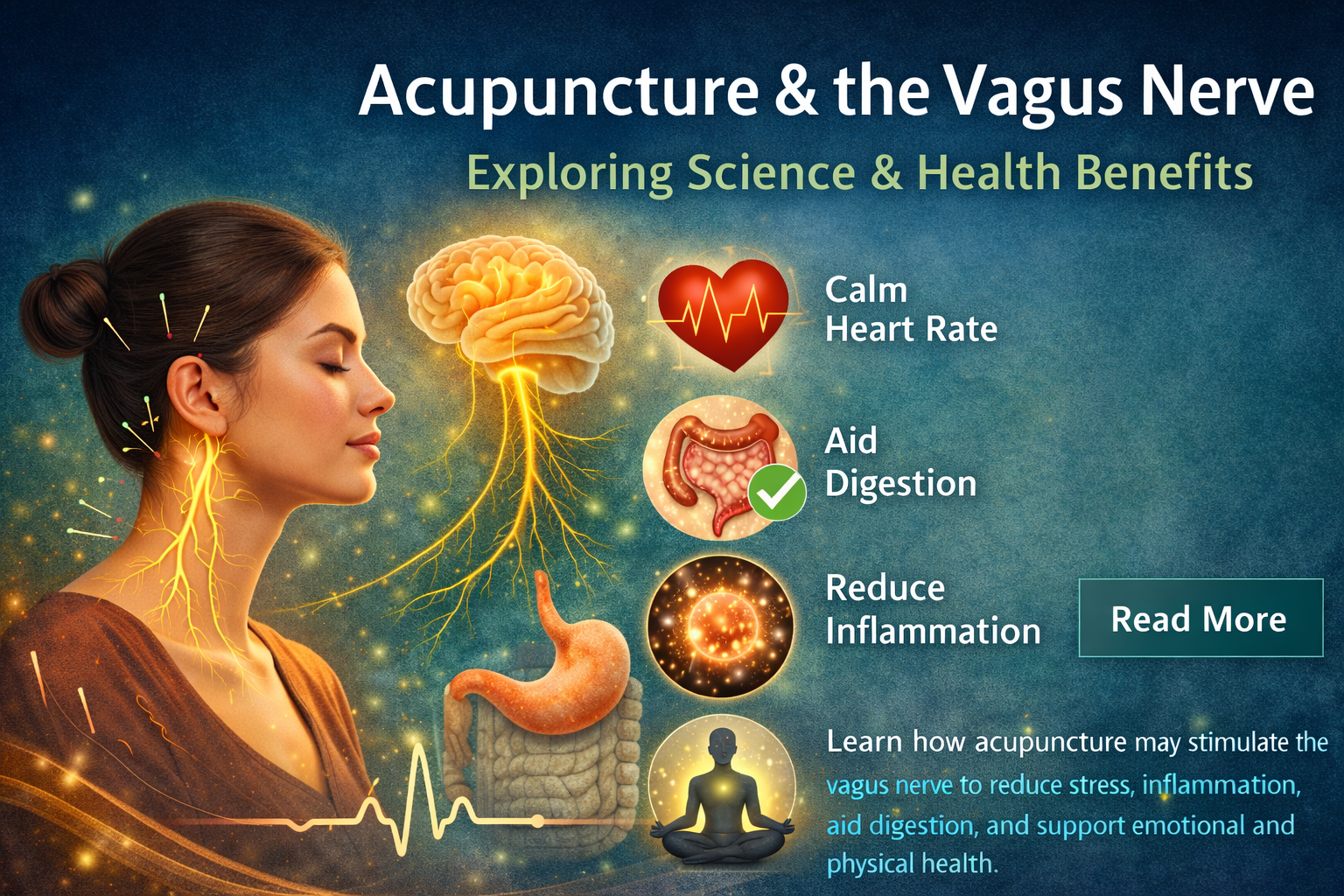
The vagus nerve—often called the wandering nerve—is the longest cranial nerve in the human body. It extends from the brainstem through the neck, chest, and abdomen, influencing vital functions such as heart rate, digestion, breathing, immune response, emotional regulation, and inflammation control. Recently, researchers and clinicians have become interested in how acupuncture may influence the vagus nerve and use this connection to support physical and emotional health.
This article explores the relationship between acupuncture and the vagus nerve, the scientific evidence supporting this interaction, and how it may benefit overall wellbeing when combined with conventional care.
What Is the Vagus Nerve?
The vagus nerve is a major component of the parasympathetic nervous system, responsible for the body’s “rest and digest” responses. It helps regulate:
- Heart rate and rhythm
- Gastrointestinal motility and digestion
- Respiratory function
- Immune and inflammatory responses
- Emotional processing and stress adaptation
Because of its critical role in maintaining balance (homeostasis), vagus nerve dysfunction has been linked to stress, anxiety, digestive disorders, cardiovascular irregularities, and systemic inflammation.
How Acupuncture May Influence the Vagus Nerve
- Neuromodulation and Parasympathetic Activation
Scientific studies suggest that acupuncture can modulate the autonomic nervous system, particularly by activating the vagus nerve pathways. Acupuncture points—especially those near the ear (auricular acupuncture) and neck—may influence vagal afferent fibers that communicate with the brainstem.
For example, acupuncture at the auricular branch of the vagus nerve has been shown to reduce heart rate and increase heart rate variability (HRV)—a key indicator of enhanced vagal activity and parasympathetic function—in human studies.
- Inflammation and Immune Modulation
Animal and laboratory research shows that stimulation of the vagus nerve can reduce inflammatory responses throughout the body. One notable study found that acupuncture transmitted signals into the vagus nerve and mediated anti-inflammatory effects in the spleen, specifically lowering the pro-inflammatory cytokine TNF-α.
This anti-inflammatory reflex, originally described in neuroscience research on vagus nerve stimulation (VNS), forms a biological link between neural activity and immune regulation.
- Autonomic Balance and Stress Regulation
Acupuncture’s influence on the vagus nerve can help shift the autonomic nervous system toward parasympathetic dominance (rest, relaxation, repair), reducing the “fight-or-flight” responses of the sympathetic system. This may lower stress markers, improve emotional resilience, and help reduce the anxiety level.
Research Evidence: What Science Shows
Auricular Acupuncture
Several clinical and neurophysiological studies indicate that acupuncture targeting ear regions associated with the vagus nerve can modulate autonomic activity. These effects include:
- Increased HRV and decreased heart rate, suggesting enhanced vagal tone
- Shifts in autonomic balance, potentially beneficial for stress regulation
- Impacts on cardiovascular and respiratory systems connected to vagal pathways
Anti-inflammatory Neural Effects
Laboratory evidence supports the idea that acupuncture can trigger anti-inflammatory cascades via vagus nerve activity. In experimental models, acupuncture stimulation led to decreased inflammatory markers through vagal pathways, reinforcing the connection between nerve signalling and immune regulation.
Autonomic Function and Physiological Regulation
Broader research into vagus nerve stimulation—both electrical and neurophysiological—suggests that modulating neural pathways related to the vagus nerve can influence systemic functions including inflammation, cardiovascular balance, and even brain-body communication. While much of this research involves implanted devices or transcutaneous approaches, it provides context for auricular and body acupuncture’s potential mechanisms.
Potential Health Benefits of Acupuncture via Vagus Nerve Modulation
When acupuncture engages vagal pathways, it may support multiple systems:
Stress Reduction and Relaxation
By encouraging parasympathetic activation, acupuncture helps the body lower stress hormones and facilitate a deeper sense of calm. This can support emotional wellbeing, sleep quality, and anxiety management.
Cardiovascular Regulation
Enhanced vagal tone may contribute to balanced heart rate and improved heart rate variability—a marker often associated with cardiovascular resilience and reduced risk of stress-related cardiac events.
Inflammation Control
Vagus nerve activation is connected to the inflammatory reflex, where neural signals help regulate immune responses. This may translate into reduced systemic inflammation, benefiting conditions tied to chronic inflammation.
Digestive Health and Gut-Brain Axis Support
Because the vagus nerve is a major neural link between the gut and brain, acupuncture’s modulation of this pathway may contribute to improved digestion, reduced bloating, and help IBS, colitis and Crohn’s disease.
How Acupuncture help improve the function of the Vagus Nerve
Acupuncture uses slender needles inserted at specific points to trigger neurological responses. Points commonly associated with vagal modulation include:
- Auricular (ear) points that align with vagus nerve branches
- Points on the neck and upper torso linked to autonomic regulation
- Body points with neurological connections influencing parasympathetic pathways
By activating these points, acupuncture sends signals through afferent nerve pathways into central autonomic nuclei, influencing heart, digestive, sex, and stress-related circuits. When the parasympathetic and sympathetic nervous system is balanced, people can have improved ED and memory.
Safety and Integration with Medical Care
Acupuncture is generally safe when performed by a trained, licensed professional using sterile, single-use needles. Side effects are minimal but can include mild bruising or transient discomfort at needle sites.
It’s important to integrate acupuncture within a comprehensive healthcare plan, especially for individuals with significant medical conditions such as heart disease, digestive disorders, anxiety disorders, or autonomic dysfunction.
Summary: A Holistic Perspective
Acupuncture’s connection to the vagus nerve offers a promising explanation for many of its observed benefits:
- Acupuncture can modulate parasympathetic activity and enhance vagal tone.
- Research supports anti-inflammatory neural mechanisms via vagus nerve pathways.
- Clinical evidence suggests improvements in heart rate variability, stress regulation, and autonomic balance.
- These effects may translate to broader benefits in emotional wellbeing, digestion, cardiovascular health, and inflammation control.
Acupuncture and the vagus nerve represent an intersection of traditional medicine and neuroscience. Emerging research shows acupuncture’s potential to influence neural pathways associated with the vagus nerve, supporting relaxation, stress resilience, gut lining, inflammation control, and overall autonomic balance. While more high-quality clinical trials are needed, current evidence provides a compelling rationale for acupuncture as a complementary therapy in holistic health strategies.
References-
- He W, Wang X, Shi H, Shang H, Li L, Jing X, Zhu B. Auricular acupuncture and vagal regulation. Evid Based Complement Alternat Med. 2012;2012:786839. doi: 10.1155/2012/786839. Epub 2012 Nov 27. PMID: 23304215; PMCID: PMC3523683.
- Boehmer AA, Georgopoulos S, Nagel J, Rostock T, Bauer A, Ehrlich JR. Acupuncture at the auricular branch of the vagus nerve enhances heart rate variability in humans: An exploratory study. Heart Rhythm O2. 2020 Jun 9;1(3):215-221. doi: 10.1016/j.hroo.2020.06.001. PMID: 34113874; PMCID: PMC8183808.
- Lim HD, Kim MH, Lee CY, Namgung U (2016) Anti-Inflammatory Effects of Acupuncture Stimulation via the Vagus Nerve. PLOS ONE 11(3): e0151882. https://doi.org/10.1371/journal.pone.0151882
- Kaniusas E, Kampusch S, Tittgemeyer M, Panetsos F, Gines RF, Papa M, Kiss A, Podesser B, Cassara AM, Tanghe E, Samoudi AM, Tarnaud T, Joseph W, Marozas V, Lukosevicius A, Ištuk N, Šarolić A, Lechner S, Klonowski W, Varoneckas G and Széles JC (2019) Current Directions in the Auricular Vagus Nerve Stimulation I – A Physiological Perspective. Front. Neurosci. 13:854. doi: 10.3389/fnins.2019.00854
- Chen, Z.; Liu, K. Mechanism and Applications of Vagus Nerve Stimulation. Curr. Issues Mol. Biol. 2025, 47, 122. https://doi.org/10.3390/cimb47020122